Tag Archives: interruption advertising

What does the Superbowl teach advertisers?

Superbowl

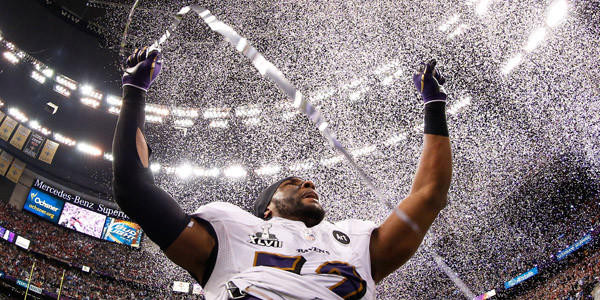
Well, Superbowl XLVII has come and gone.
The Superbowl is commonly referred to as ‘the greatest show on earth’, and by now there has probably been plenty of chatter about the game and the ads that screened. I haven’t yet had the time to view any of the ads, so I can’t really comment on whether the best of this year’s crop starred clydesdales, babies, monkeys, or attractive girls in revealing singlets.

But what I do find interesting about the Superbowl every year is that it is two advertising ideologies working side by side.

On one hand, we have the interruption model in all its glory – where advertisers pay around $4 million to interrupt the sports game for 30 seconds (source: forbes.com). Indeed, with an audience of over 110 million people, spanning multiple generations, and 40% of them female, the Superbowl is still one of the few places where marketers can overcome today’s diverse media fragmentation.

Then on the other hand, you have the content model where people actually tune in to see the ads. Yes, the ads are as much of the entertainment as the actual game. In this case, the ads aren’t piggybacking on the entertainment; they are the entertainment!

So the obvious question is, ‘why don’t more marketers always make their ads to a Superbowl standard so people will want to see them?’
Well, let’s put it this way: you can either pay lots of money to interrupt ‘the greatest show on earth’, or you can invest the money more directly into your brand and turn it into ‘the greatest show on earth’ (or at least the greatest show in its category).

For many, the latter option is viewed as a lot of hard work, carries a higher level of risk, and takes more time to build (i.e. sometimes longer than a Marketing Director plans on staying in the job).
However, the successful brands of the future will look to become ‘the event’ rather than solely piggybacking on someone else’s. As the Superbowl illustrates, if you make good ads, people will engage with them.

DUSTIN LANE
Brand Strategy | Advertising Concepts | Copywriting

Visit risinggiants.co or dustinlanecreative.com

Image: baltimoresun.com

Time poor = Attention poor

The other morning it was raining so unless I wanted to sit in wet clothes all day, it meant leaving the motorbike at home and catching public transport to work.

First, the bus. A lady sat next to me and, for the duration of the trip, furiously checked the emails on her Blackberry – no doubt trying to get up to speed so she could hit the ground running once she actually arrived at work.

Next, I was off the bus and boarded the train. In my carriage were two young ladies. Given their confined surroundings, they were having a reasonably loud conversation. It grabbed my attention because it turns out that one of them worked at another ad agency, across town. She was telling her friend how busy she was at the moment with one particular account, how she was working 14-hour days, and how the agency couldn’t afford to hire another Account Manager to help her out.

After the train, a short walk was all that was left between me and my place of work. However, just outside the station were two young people in purple t-shirts trying to hand out flyers for a nearby car-parking station. Like me, most people brushed past them in their hurry to get to work.

This small observation was where most advertising sits with people’s time-poor lives. The offer on those flyers could have been great. In fact, they could have been offering parking space for free, but because the message wasn’t delivered in a way that people were willing to accept it, it was lost.

People simply haven’t got time in today’s busy world. Just ask the lady reading her emails on the bus, or the train lady on her way to another 14-hour day. John Kane, founder of Happy Soldiers, used to tell his clients that their starting point was that people simply don’t care what the client has to say. And it’s true.

Years ago, Howard Gossage said that people read what interests them, and sometimes it’s an ad. Nothing’s changed. Put simply, it’s never an interruption if it’s interesting.

Back to those people handing the flyers out. What if you gave them a guitar and asked them to write some lyrics about how much better driving to work would be than using public transport? Surely, that would be better accepted than trying to shove flyers in people’s hands.

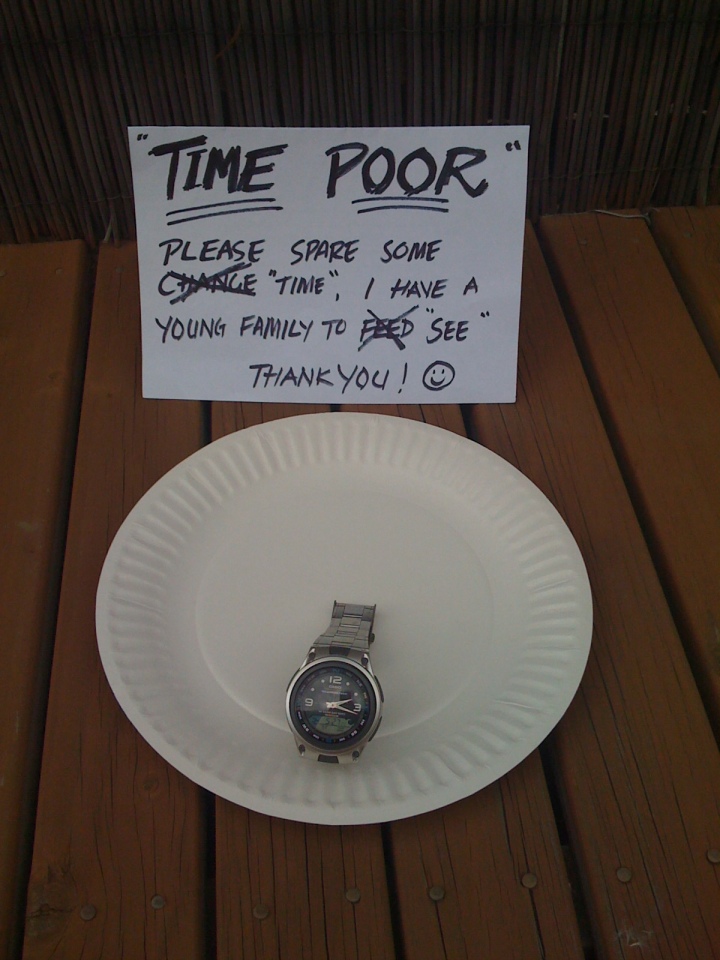
Look at the guy below. He had a pretty mundane message, but I’m sure people talked about it for days…

DUSTIN LANE
Brand Strategy | Advertising Concepts | Copywriting

Visit risinggiants.co or dustinlanecreative.com