Tag Archives: Dingo’s breakfast

The difference between an idea and an execution.

A friend, and one of Australia’s leading advertising recruiters, Esther Clerehan, often answers questions from aspiring art directors and copywriters on her blog. Recently, she was asked, ‘What is the difference between an idea and an execution?’

This question does come up a lot, and a lot of people still wrestle with it. So, for what it’s worth, this is how I use to explain it to AWARD School students:

Before you learn about advertising ideas, it’s easy to jump straight into the execution. After all, the execution is usually the tangible part that we see or hear. It’s the finished ad.
But a big step forward in your understanding of advertising comes when you learn to divorce the execution from the idea. You can look behind the shiny surface and see the thinking to how the ad was actually constructed.

When people refer to ‘the execution’, they’re referring to the more detailed specifics of an ad. However, when you take a step back and ask yourself, ‘what is the idea behind this execution?’, you’re able to get a broader view of what it is you’re saying.

I know this can be a bit confusing so to illustrate what I’m talking about, here are some examples below:

VIRGIN MOBILE – ‘JASON DONOVAN’
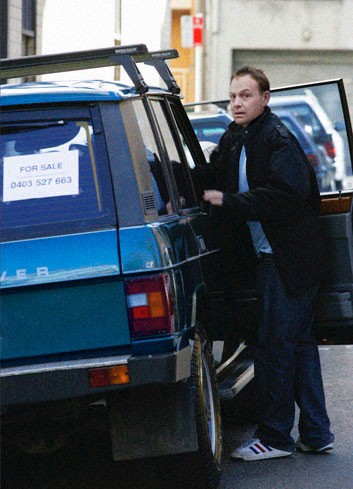
jason donovanJason Donovan billboard

If you’re not familiar with this campaign, you can take a look at a brief case study here.
Here is what the proposition on the brief probably was:
Virgin Mobile has low-cost call and text rates.

Here’s what the idea is:
These rates are so low, you can even afford to waste your phone credit by making prank calls.

The execution is:
Create a situation where Jason Donovan’s mobile phone number is leaked to the public.

BIC PERMANENT MARKER – ‘JIMI HENDRIX’

bic pen Jimi Hendrix

The proposition on the brief probably was:
With Bic Permanent Markers, the writing never comes off.

The idea is:
Let’s simply show writing that has been around for a long, long time.

The execution is:
A Jimi Hendrix fan who once had her breast autographed by the now-deceased musician.

VW – ‘SINGIN’ IN THE RAIN’


The proposition on the brief probably was:
The new Golf GTi  has loads of new features.

The idea is:
The GTi is an iconic car, and now it’s even better. Let’s illustrate that by showing how great things can be improved on.

The execution is:
A classic film scene, re-made to feature more modern music and dance styles.

Why is it important to distinguish between an idea and an execution, anyway?
If you can show that your idea is not just a one-off execution, it’s more valuable.
You can show that it can be executed a number of different ways. That’s important if you want to run a campaign idea for an extended time, which in turn helps build equity into a brand.
An idea is also important because it means you’re not back to ‘square one’ if something in the execution goes wrong.
For example, if the Virgin client absolutely hated Jason Donovan, you could find another celebrity. Or if the use of a celebrity is beyond the budget, you could execute the idea as cab drivers or pizza delivery guys protesting against prank calls. You could have the entire campaign look like a public service announcement, if you wished.

The important thing is that ‘big ideas’ can usually be executed in a number of different ways.
Depending on who you’re presenting to will dictate how much you have to execute the idea to illustrate what it is you’re talking about. Some people tend to see ideas better than others. Many people get caught up on executional stuff (like someone saying, ‘I don’t like the colour of the guy’s shirt’ or ‘Can we make the logo bigger?’).

DUSTIN LANE
Brand Strategy | Advertising Concepts | Copywriting

Visit risinggiants.co or dustinlanecreative.com

Creativity is not linear. Actually, it’s like bacteria.

The ad below screened on TV years ago, but the other day it popped into my mind again.
https://www.youtube.com/watch?v=h9VWF1DXQ8s

In particular, it was the part that says, “in the last five metres of braking, you wipe off half your speed”.
See, I’d just taken a brief with very tight timings and the accounts person was trying to schedule a review. They suggested that they check in at the half-time mark and see how the work was looking. I told them that wouldn’t work (in fact, I knew it would only make them panic).

Put simply, at the half-way mark, you’re not going to have half the ideas done. It just doesn’t work that way. That’s why most pitches come together right at the last minute (usually over cold pizza, at 3am, while sitting in the agency wondering how you can function on so little sleep).

Instead, the creative process can be a little bit like bacteria, like this video below shows. (After 91% of the time had passed, bacteria fills only 3% of the bottle)
https://www.youtube.com/watch?v=x5OYmRyfXBY
So, don’t stress when a lot of the allocated time has passed and there’s not much work to show yet. It’s normal.

DUSTIN LANE
Brand Strategy | Advertising Concepts | Copywriting

Visit risinggiants.co or dustinlanecreative.com

Talk has always been cheap. But now it’s even cheaper.

It seems that almost every day, I hear stories or read articles about how the digital world is killing various businesses. However, in my opinion, it’s not the digital age that is causing grief for many organisations. It’s actually their inability to be authentic.

In marketing, there once was a methodology that if you told people your message enough times, they’d ultimately believe it (or as some would say, ‘throw enough shit, and some of it will stick’).

But, as we all know, mass communication is no longer the sole domain of commercial media channels. Anyone with a Twitter account, or access to an online forum can reach a large audience. That means that brands can’t rely on simply talking a good game, they now  have to actually play a good game.
Or, as one marketing quote puts it, “A brand is no longer what we tell the consumer it is. It’s what consumers tell each other it is.”

But the most successful brands have always set out to ‘do’ rather than ‘say’.
After all, a good comedian doesn’t tell you he’s funny. He simply is funny.
Good brands live their values. They don’t just put them together in a Powerpoint presentation and then subscribe to the ‘throw enough shit’ model.

And ads are simply an extension of this. It’s ads that ‘do’ rather the ‘say’ that are the most powerful. For example:

Apple, with their grammatically-challenged line, actually were different.
Apple_logo_Think_Different_vectorized.svg


Likewise, Tesco didn’t talk about making cuts. With it’s tagline, they did.
tesco.jpg


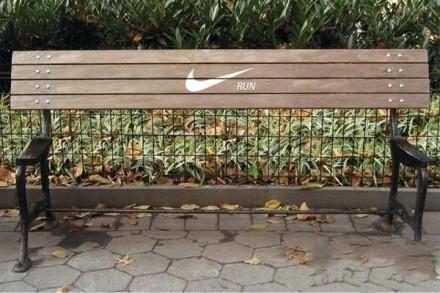
Nike doesn’t just talk about getting out there and doing it.
nike bench


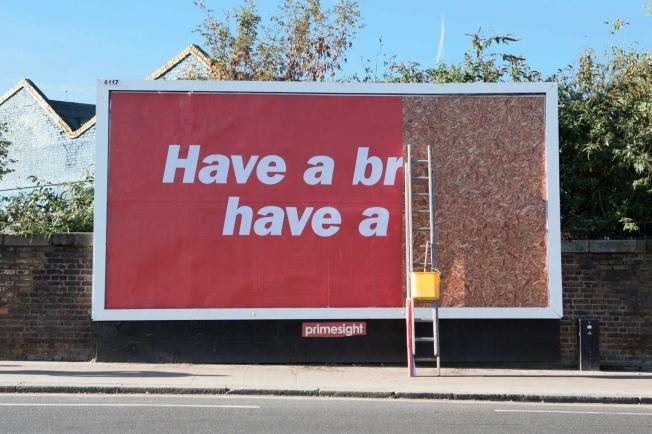
And Kit Kat doesn’t just lecture people to take a break. They take one themselves.
kit kat


It’s when you  say you do one thing, and you actually do another, that brands run into trouble. The digital age has merely exposed it.

DUSTIN LANE
Brand Strategy | Advertising Concepts | Copywriting

Visit risinggiants.co or dustinlanecreative.com
The clients you would never work for

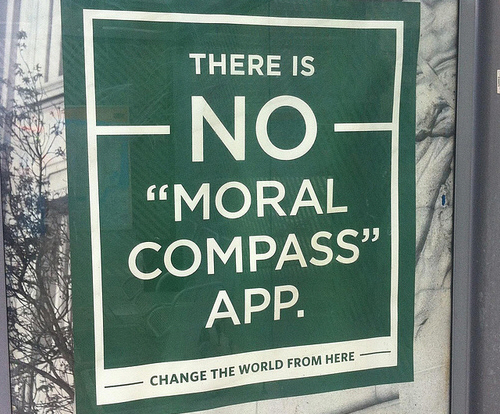
Moral-compass-appIn the advertising film Art & Copy, there’s the following comment from an advertising great: “I always thought advertising was the most whore-ish business a person could get into”.
And in some ways that’s true. After all, an ad agency will help shape an argument/story/perception around almost any organisation’s offering. And to create that perception they tell the story from a particular perspective – a bit like a lawyer defending her client. Or put another way, we act in a similar fashion to mercenaries.

As advertisers, we take the time to understand our clients’ background and see things from a certain point of view. We’re able to step outside of ourselves, adapt and walk in the shoes of the prospective target market in order to find a way to appeal to them.
Throughout my career I’ve seen vegetarians create great ads for the meat and livestock industry. I’ve seen people create successful campaigns for a political party they didn’t vote for. And I’ve witnessed people make particular banks into powerful brands even though, personally, they’d never do business with them.

However, on a personal (and sometimes agency) level, most of us have our limits on the types of businesses, products and organisations we’ll help represent.
Many years ago, I knew a junior copywriter who resigned when asked to work on a tobacco account. And more recently, I read an article about one MD who declared his agency would never work on a gambling client.

For me, I’d be really uncomfortable working for an online gambling business. Not sure why, as I haven’t had firsthand experience of somebody with a serious gambling problem. Maybe online gambling just feels a little too accessible and therefore easy to escalate out of control?

So what about you? Which client would you refuse to work on? A fast-food? A company with a bad environmental record? Alcohol?

DUSTIN LANE
Brand Strategy | Advertising Concepts | Copywriting

Visit risinggiants.co or dustinlanecreative.com
Advertising, without the bullsh*t

bullshit-meter-2We’ve all sat in those meetings when people pull out the latest buzzwords and newfound formulas for success. It reminds me of an old saying: ‘If you can’t dazzle them with brilliance, baffle them with bullshit’.

Don’t get me wrong. I’m all for keeping up with trends, innovation, opportunities and measuring things. I’m just not for the bullshit that many people put with it. Big words, sentences that don’t mean anything, and stuff like this gem below, that crossed my desk last year:

Jargon proposition

It’s jargon. It’s waffle. It’s saying something, without saying anything.
As a piece of communication, it’s severely lacking. It’s one of those things that looks good in a document or presentation slide, but everyone asks in a more private setting, after the meeting, ‘what does that really mean?’

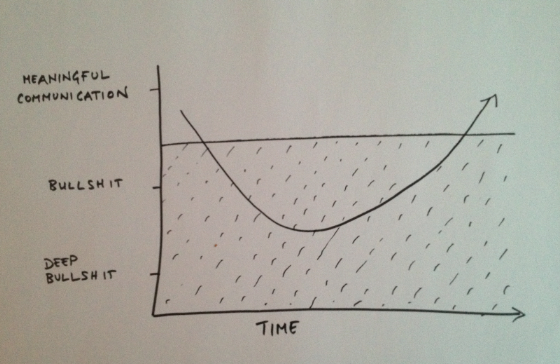
Years ago, the founding partner of an agency I was working at gave a great reason for why people do this. In his career of 30+ years, he realised a pattern. It’s illustrated in the diagram below. Essentially, he said junior people  in the industry wanted to sound more senior, like they knew what they were talking about. As a way of doing this, they use a lot of jargon and industry buzzwords. Then, he said, as people become more confident in their ability and experience, they usually parked these bullshit terms, and tended to speak like people again.

Bullshit graph

Look, we’ve all talked a bit of bullshit at one time or another. I guess the trick is trying to limit or eradicate it from your work.
Or put another way, try and  be an island of reality in a sea of bullshit.

DUSTIN LANE
Brand Strategy | Advertising Concepts | Copywriting

Visit risinggiants.co or dustinlanecreative.com
A successful formula for advertising: realising that there is no successful formula for advertising

Well, it’s the start of a new year. A time when we usually step back and take a look at where things are at. Our fitness. Our finances. Our job. Our relationships. Around this time of year, there’s not much that doesn’t get reassessed. Sometimes we take action, sometimes we don’t.
Unfortunately, it’s also that time of year when the ‘predictions’ lists come out. You know the ones – things like ’10 apps you will need to survive 2014′, ’10 ways big data will reinvent marketing in 2014′, ’10 ways TV will be dead by December’. Many marketers are looking for a formula for success. The problem is that advertising isn’t all science. It’s half art, and art is unpredictable. (Actually, even science is unpredictable if you recall the film Jurassic Park).
Art that is loved by an audience at one point in time might not be so well received at another point in time. Fashion is art. Architecture is art. Music and film is art. And, a large part of marketing is art.
While science can be applied to marketing, there’s certainly no 100% foolproof formula for success (not even the one featured in the video below, explained by David Droga).

DUSTIN LANE
Brand Strategy | Advertising Concepts | Copywriting

Visit risinggiants.co or dustinlanecreative.com
Mark Twain was wrong. Shorter isn’t always better.

A famous Mark Twain quote goes like this: ‘I didn’t have time to write a short letter, so I wrote a long one instead’.
Plus, almost every advertising book ever written also extols the virtues of crafting copy so it’s short, sharp, and punchy. After all, less is more.

And while I agree, I’ll also say that it’s important to know when to bend the rules a little. Sometimes you’ll run into a client who has also read those same advertising books. They then go to work trimming back words with little regard to the overall effect on the tone of the ad. As a result, sometimes you find it’s definitely shorter but it’s also lost something. So, while ‘shorter’ is one way of making copy better, it’s  not synonymous with  making copy better.

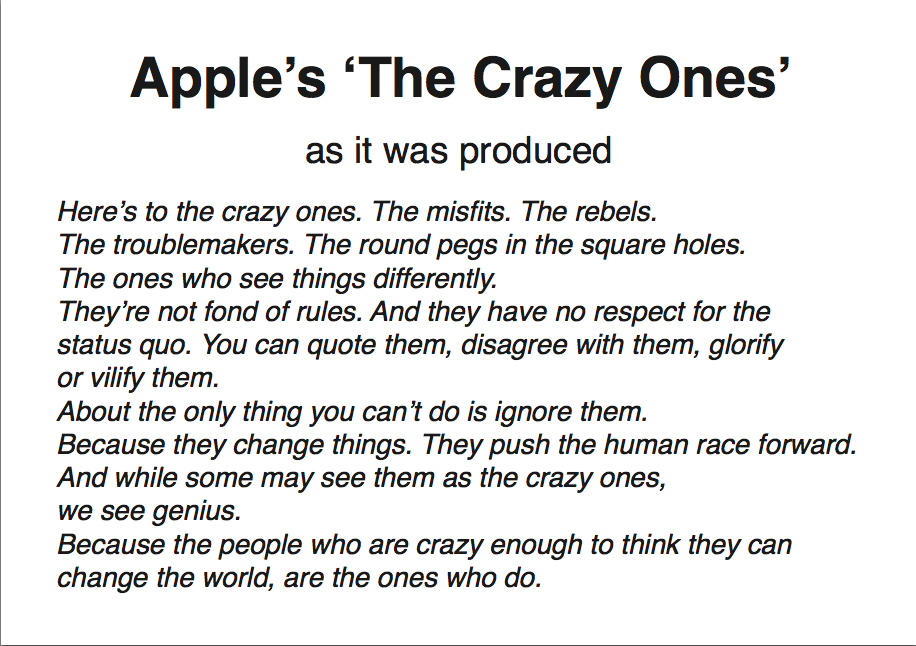
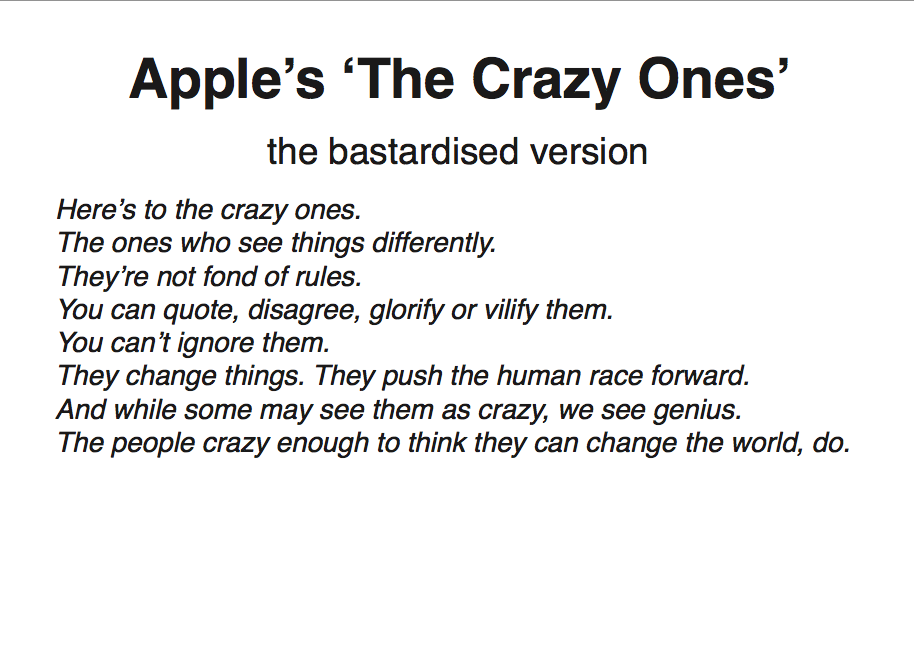
To illustrate this point, I’ve taken the script of one of my favourite ads (1997’s ‘Crazy Ones’ for Apple, by TBWA\Chiat\Day). I’ve then applied the ‘word economy’ rule and cut out the tautologies and other words someone might deem to be ‘superflous’.
Sure, you end up with shorter copy, but I wouldn’t say it’s better.
If you know the rules, you should also know when to break them (or, perhaps more relevant here, when to ‘think different’).

crazy ran

crazy strikethrough

crazy bastardised

5 thoughts on voice over artists

Microphone and cansI recently finished a job that required using a few voice over artists. I remember when I first started working in advertising how cool it must be to actually say that you’re a voice over artist. Imagine dropping that at a dinner party when people ask what you do. Or a world, in my mind at least, where girls suddenly listen harder to what you say when they find out you’re a VO (after all, if  other people pay money just to hear you speak, that voice must be nice to listen to, right?).

Not a lot is ever said about voice over artists. Usually, casting isn’t given enough time and/or consideration.  But I think it’s important. If you don’t agree, simply listen to the great Miller campaign directed by Errol Morris. First, listen to this ad. Then listen to this one, or this one, or this one. In my opinion, the second voice adds so much more to the spots. It helps create a great tone and personality for the brand.

So, here are 5 thoughts on voice overs:

1. Voice over artists should never sound like voice over artists.
Unless you’re doing an ad that takes the piss out of voice over artists, or a trailer for this Summer’s film blockbuster, your VO should never sound like the guy in the video below.
http://www.youtube.com/watch?v=fVDzuT0fXro

Honestly, in the real world, who talks like that? Except this guy.
Yet, casting for VO talent is hard. Usually, the only useful part on their demo reel is the bit at the start where they say, ‘Hi, my name is ……, and this is my demo reel’. After that, they launch into ‘the big voice’, so it can be hard to get a good grasp on what they really sound like. For that reason, I find actors are generally better than pure VO artists. Actors understand the character or role they’re playing and tend to speak rather than project their voices.

2. Talk the talent through your idea.
Don’t just hand them a script and ask them to step into the booth. Before that, talk them through your idea or script. Give them a bit of context so they can get a feel for the type of read you’re looking for.

3. You can tell early.
I reckon you can tell in the first 4 reads if you’ve cast the right person or not. People either get it or they don’t. Sometimes this isn’t the case and people can get it with a little more time but, generally speaking, they’ll be reasonably close to the mark early on. And that brings me to my next point.

4. Don’t burn the talent out.
Usually, when a voice over is freshest, you’ll get the best from them. The writer knows the way they want it read (the tone, where the emphasis and inclinations lie, the type of character etc). Get that down first. Then feel free to try some other stuff – good talent sometimes add things that can really improve your script.

5. Have a great sound engineer.
A great sound engineer brings so much to the table. They know their stuff, can make useful suggestions and, like good VO talent, make 30 seconds seem much longer when you need it to be.

What about you? What other tips would you offer regarding the use of a voice over artist?

DUSTIN LANE
Brand Strategy | Advertising Concepts | Copywriting

Visit risinggiants.co or dustinlanecreative.com

Is your big idea a one-off?

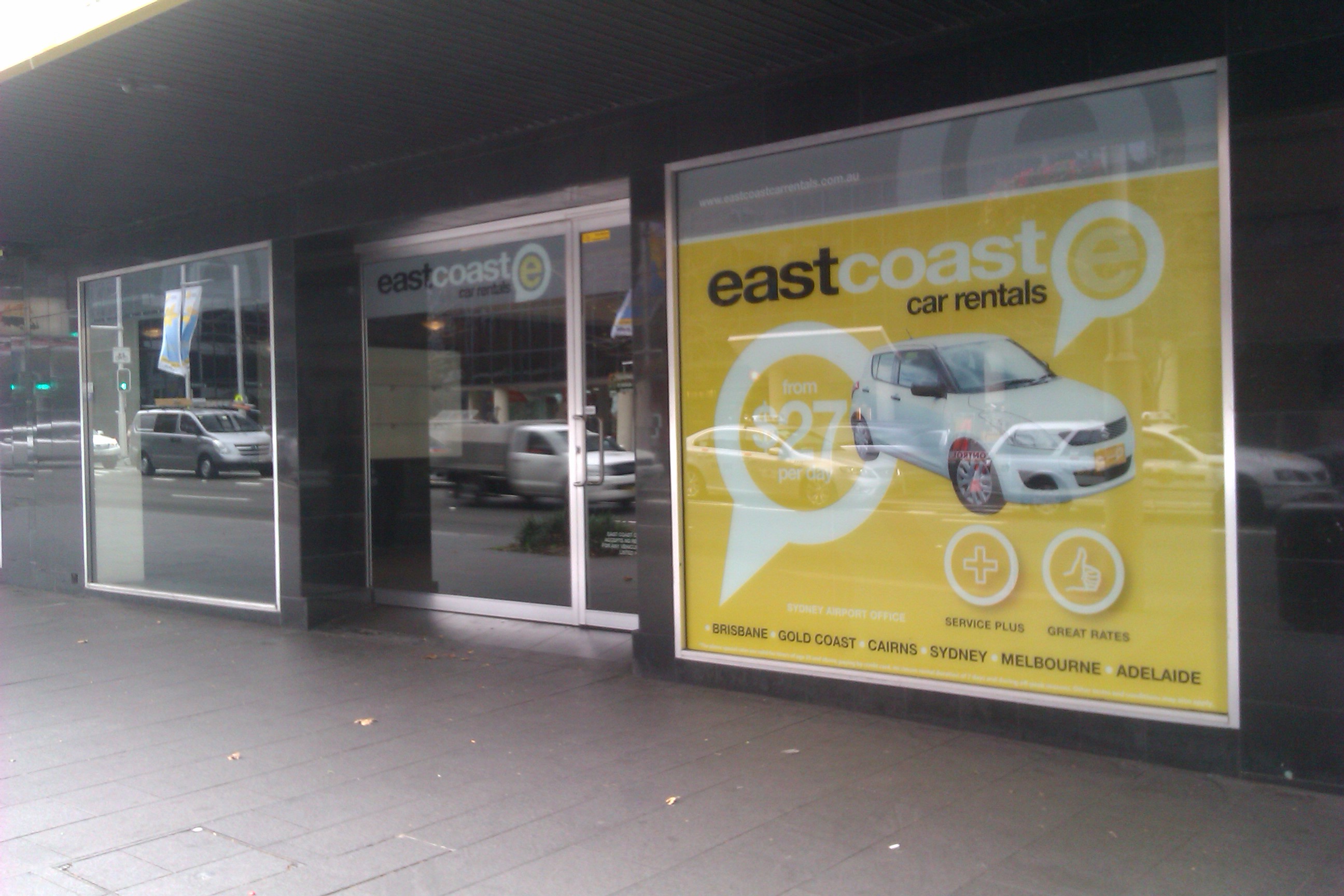
$27 car rentalHere’s a picture of a shop near my office. Three weeks ago it was a Lamborghini dealership. Now it’s a place that rents small cars for $27 a day. I reckon that might be a pretty good reflection of where things are at. It seems most successful business models now drive profit through volume rather than margin. And I’m relatively sure there are more people looking to rent a car for $27 a day rather than buy one for a lazy half million dollars.
Look at the businesses making all the money – supermarkets, Google, telcos, the list goes on. They all sell lots of product for a small margin rather than fewer products at a large margin (perhaps with the exception of Apple, who seem to be doing both margin and volume).

And that brings me to advertising agencies. Most advertising agencies deliver a very bespoke product. It’s an idea or advertising campaign designed to suit a particular client’s needs. Even if it can be used to carry another client’s message, it’s contractually obligated not to do so. This means all the work  you do in delivering a product (campaign or idea) amounts to one sale.
So rather than make one product and sell it thousands, perhaps millions, of times  we make one product and sell it once. (Actually, it’s lower than once when you consider the ideas and campaigns we work on that the client doesn’t buy.)

Then on top of this, you have other forces working against the ‘way it used to be’. The internet has conditioned us not to pay for stuff anymore. It’s given rise to the Fremium model, and things like Fiverr.
Sure, in most cases, you get what you pay for. But it seems people don’t like paying for the art of a Lamborghini when they think they can do the same with a car for $27.
So what about you and that big idea you’re working so hard on? Are you only going to sell it once?

DUSTIN LANE
Brand Strategy | Advertising Concepts | Copywriting

Visit risinggiants.co or dustinlanecreative.com
Are you getting in to advertising, or getting out?

Years ago, I was asked to give a talk to advertising students at a university.
Now, it seemed that every intern or grad primarily wants to know the answer to two questions: 1) How did you get your job?; and 2) What advice would you give to others?

So in preparation for my talk, I took the opportunity to ask a few colleagues around the department and filmed their responses. That way, the students at the lecture could hear other stories as well as mine.
This video is below (please excuse the transitions – it was 2006. I was young. iLife was in its infancy).

I once heard the story of a young creative being told, ‘You’ll be underpaid in the first half of your career, and overpaid in the second half of it’. Well, I’m not sure the back half of that sentence still applies in today’s world. The profit margins simply aren’t there anymore.

But recently I came across another video, below. It’s not about getting in to advertising. Instead, it’s about using advertising as a stepping stone towards something else. Spending time in the advertising industry provides you with some great skills – you get to think outside the box, you get to challenge conventions, you see behind the curtain of lots of different industries.

One of the best books I’ve read over the past few years is Seth Godin’s Linchpin: Are You IndispensibleIt really opened my eyes to the way industries have historically worked, and how all that is now changing.
For me, that book was a bit like opting to take the red pill.
So what about you? Are you getting in, or getting out?

DUSTIN LANE
Brand Strategy | Advertising Concepts | Copywriting

Visit risinggiants.co or dustinlanecreative.com