
Okay, I wrote this article back in 2014 but never published it, until now. In it, I continue to explore the question, ‘Where do all the art directors and copywriters go when they get older?’
For earlier posts, see Part 1: Matt Cumming, Part 2: Adam Hunt, and Part 3: Billy Plummer.
Part 4: Ben Nott
10 October 2014
I caught up with Ben via Skype. After a few days in New York, he had just returned to his LA office in Venice Beach’s Abbot Kinney Boulevard. GQ Magazine calls it the ‘coolest block in America’ but Ben thinks that it could also be called ‘the most expensive rent in America’. He spins his laptop camera around, giving me a quick tour. Some of his father’s artwork adorns the office walls and the actor, Robert Downey Jnr. lives just across the road. He then takes me back to where it all started and how he ended up here:

I always wanted to do something creative. My father was, and still is, a successful abstract artist. And my mother worked as a photo journalist with Australia’s national broadcaster, the ABC. They didn’t really push me either way, however I saw the up-and-down nature of Dad’s life as an artist. He would have long periods of working with little income, then there would be an exhibition, and then the process would begin again. I wanted something with a more commercially-stable income.
From around the age of 12, I was a successful surfer and was sponsored, head to toe. But I wanted a career with greater longevity and security.
At 17, I began studying Communication at Sydney Technical College. I attended classes 5 nights per week, and it was a 3-year course. To enrol in that course, I was meant to be 21 years or older, but I lied. So in effect, I graduated before I was even meant to be doing the course.
At 18, to get into an ad agency, I applied for a job as the mail boy at Sydney’s Leo Burnett office. I quickly learned all the departments by delivering their mail and I did other things like moving the directors’ cars and purchasing the agency’s alcohol. John Newton was the CD there at that time and he was always nice to me. I did a year and a half there, before scoring a job as a junior writer at McNabb Willett & Donahue – a fairly small agency of around 30 people.
I did the Australian Writers and Art Directors (AWARD) School course on 3 separate occasions – once before I started working at Leo Burnett, once while I was there, and once when I was at McNabb. I kept doing it because I wanted to win it, but the best I ever did was 4th place. My friend, David Droga, had previously won it so I guess it was my competitive streak kicking in. Plus, AWARD School was a great place to meet other creatives and grow my network. At the beginning, I wasn’t sure if I wanted to be a copywriter or an art director, but then I made the decision that I wanted to do both. I loved both crafts.
I stayed at McNabb Willett & Donohue for about a year before moving to anther small agency called YPD. As is usually the case, moving to another agency saw me climb a level. So at YPD, I was probably considered a mid-weight creative. I had a female CD there, which was a nice change. There ended up being a mass round of retrenchments, of which I was one. But I had been planning on moving to DDB Sydney, so it actually worked out well. I stayed at DDB for about 3 or 4 years. For my first couple of years there, I tended to be teamed with senior art directors and I learned a lot very quickly. Adam Hunt then came to the agency to be my art director. I liked his rawness.
By then, I’d decided that I really wanted to get overseas. I’d previously done a 6-month stint at DDB’s New York office, off the back of an award win.
I saw the overseas markets as a bigger league – bigger clients, bigger budgets, and brand work that stood the test of time. Plus, you got to compete against really good teams.
New York still seemed to have that ‘Madmen vibe’, and a lot of the world’s really great work was coming out of London. Plus, there were a lot of poms (English) in Australia influencing the advertising landscape. So Adam and I decided to head for Europe as a team.
After a lap of Europe and lots of surfing, we started working at an agency in Amsterdam called PMSvW/Young & Rubicam. They seemed to be at the forefront of a new style of advertising that was happening – it was more visual, and I liked that. Paul Meijer was the Creative Director there and I knew that he directed a lot of his own work, which I also liked.
Adam and I had earlier sent Paul Meijer a piece of direct mail to help get our foot in the door (see Adam Hunt’s story).
We had a lot of fun working in Amsterdam. It was inspirational. Paul was a bit of a rock star in advertising circles around Europe and he wasn’t afraid to push his own style, which I admired.
It was during this time that I became the youngest person ever to win a Grand Prix at Cannes. It was for an ad that I had done back in Australia with Paul Bennell. we’d done a print ad for Kadu board shorts while at Siimon Reynolds‘ agency, Andromeda. It was a brash, aggressive style of ad for its time that used shocking imagery.
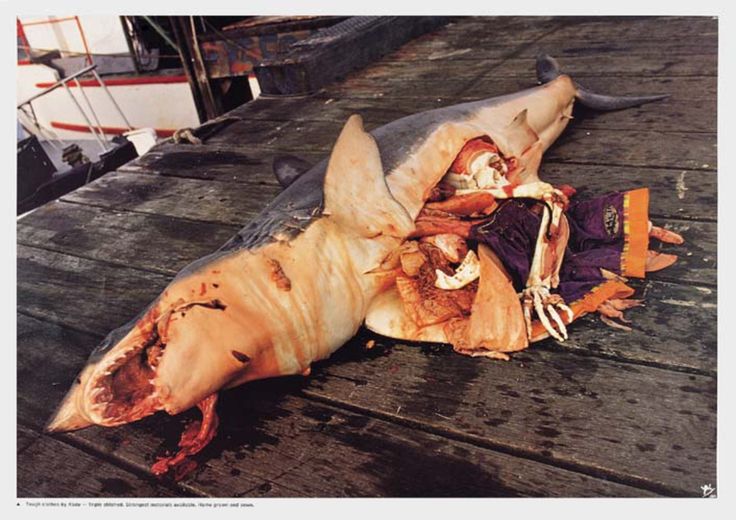
Off the back of that Grand Prix award, I received about 10 job offers from 4 different countries. Adam and I chose to go to Saatchi & Saatchi in London. James Lowther was the CD there.
While at Saatchis, we actually won another Cannes Grand Prix for an anti-racism ad. That would have been two in a row, however it was decided that the ad couldn’t claim Grand Prix because it was for a charity. It still won gold and silver lions. Plus, it ended up on lots of t-shirts. That felt nice as it was for a good cause.
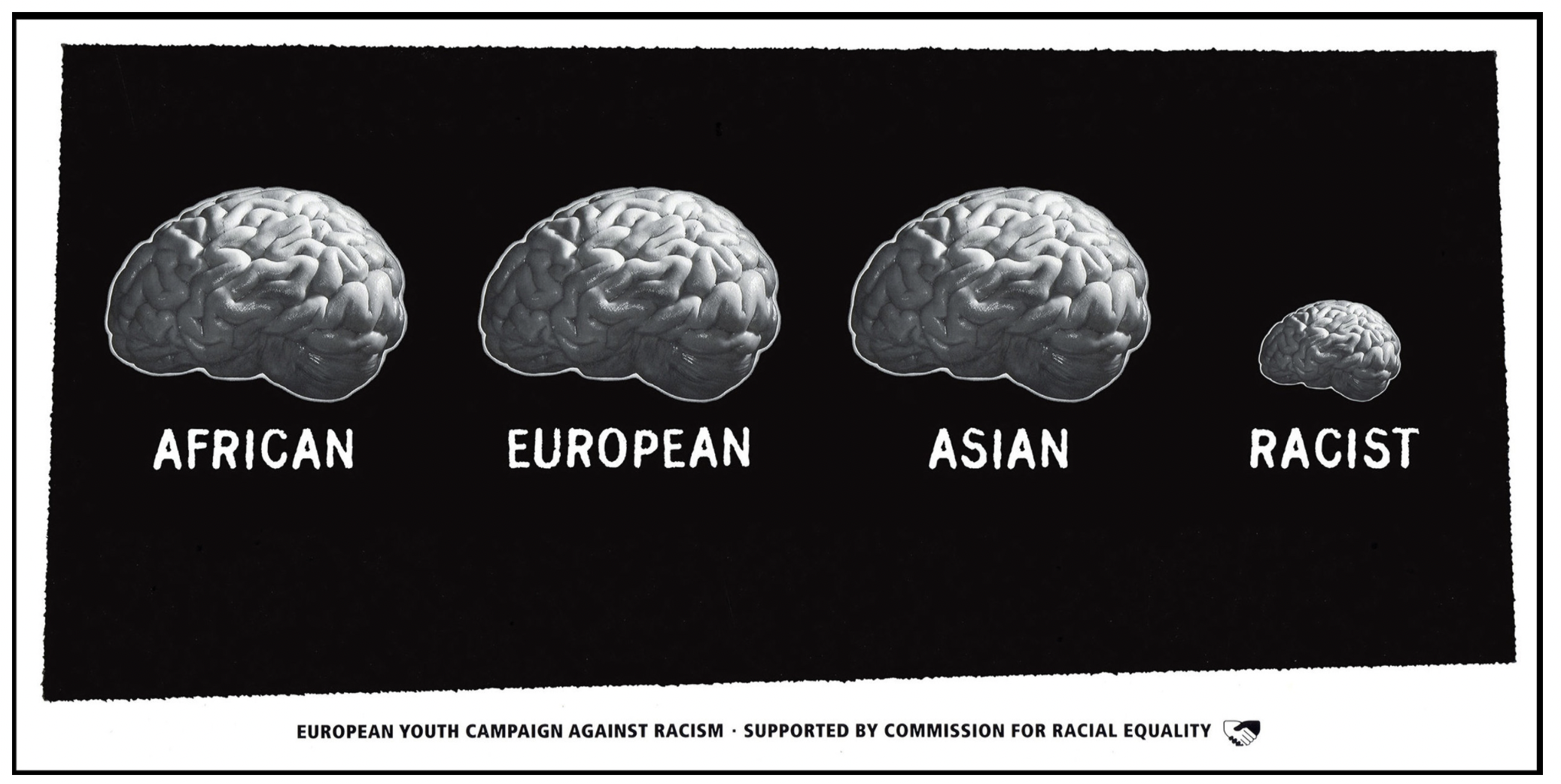
We stayed at Saatchis for about 3 years. It was good. I was directing commercials and we were winning lots of awards. But I could see the same battles happening again and again. I found it a little predictable. I enjoy new things and learning, plus I wanted to get into directing more.
On the day that my contract with Saatchi & Saatchi expired, M&C Saatchi wanted me. I ended up doing a deal where I was a retained freelancer and would work at M&C for 1 week per month. That allowed me time to travel and direct projects for the rest of the time.
I also did short stints at a couple of other agencies in London. I found BBH to have a bit of a fear-based culture in trying to produce the work. Wieden+Kennedy London were looking for a new CD so I also filled in there for 2 or 3 months.
After 6 or 7 years of working in London agencies, I joined a great production company called Outsider. They’s just opened their doors. Saatchi & Saatchi would still get me to shoot stuff, and they had their own internal production department. I also did a few music videos too – for artists like Tom Jones, Talking Heads, The Cardigans, and some indie bands. I really enjoyed having more than 30 seconds to work with. I also got to travel a bit, to places like Dentsu in Japan.
I was enjoying that time, practising directing, judging some awards shows – just learning and extending myself. Creative teams knew that I was going to look after their idea. I love enhancing ideas, offering new ways, and making something the best it can be. I’m an eternal optimist and because I could make good money from advertising, I never felt any pressure to go against my beliefs or do something I didn’t really want to do.
However, America was calling. Just as had viewed London as the ‘top league’ of creating ads, I saw the USA as the place to be when it came to film. Plus, living on the west coast would mean I was close to the surf again.
After moving to the United States, I started developing screenplays and did some freelancing for ad agencies. It was a good time in the industry and the rates of pay were good. However, I still craved to do something longer than music videos and ads – I wanted to do feature films.
I met the CD of TBWA/Chiat Day, Chuck McBride. He also surfed and directed ads. He offered me a job I couldn’t refuse. It was good money and a great opportunity. Chuck understood my vision and the things I wanted to do. I ended up travelling around a bit in that role. I got to do some really nice work, and won more awards at Cannes and D&AD.
Lee Clow was my boss and he understood I wanted to do more surfing and work on other projects. He made a deal with me where he would pay me a full salary in return for 100 days’ work per year, and I could work from anywhere in the world. It worked well, and during that time I started to develop what would become my first feature film, Drift.
Around that time, Droga5 was starting up. David Droga had always been a good friend from our time at AWARD School and TAFE College in Sydney. We had always toyed with the idea of putting something together and doing it our own way. Honeyshed (Droga5’s founding project) was totally new. It was the Shopping Channel meets MTV, funded by Publicis. And after all, if it was more screen time that I wanted, here was an entire channel.
Honeyshed operated out of New York and LA and had a team of about 50 people. Looking back, it was probably ahead of its time and it never really got launched properly.
At the same time, we also did some more traditional ads through the holding company name, Droga5, and we won a ‘Best Creative Agency’ title.
I enjoyed my time at Droga5, working with good friends, and on some interesting projects in China. However, I’ve always liked to have lots of different opportunities on the go. From my time in London, I had operated my own little company called World Wide Mind. It had always involved little side projects and things like designing album covers. Now I began to do more work on Drift, with World Wide Mind being the company behind it.
From the initial stages of Drift to completion was a period of about 7 years. That involved script development and working with various partners. We got $12 million in funding, thanks largely to a grant given by the Australian Government in support of the arts. Drift has kept me busy for the past few years, as I’ve worn the hats of Co-producer and Co-director.

Actually, at the time of this interview, I’m preparing to attend an event at the Australian Embassy here in Los Angeles. It’s called ‘Aussies Innovate in LA’ and is all about Aussie entrepreneurs in the U.S.
I currently have a TV series in development with FOX, and 3 other screenplays in development – some already have actors attached to them. Due to the long timelines involved with some of these projects, I still direct a few ads here and there. I’ve also been recently involved in the development of an app called BAM (Best anything Message). Put simply, it allows the user to send a video instead of an SMS.
I always enjoy collaborating and creating. I love anything that is at the intersection of advertising, entertainment and technology. I’m also currently doing some design work for Kelly Slater’s wave pool – that gives me the chance to combine surfing, creativity and advertising.
For me, it’s always been about bringing ideas to life and having fun doing it, whatever the medium. I’ve always followed the path of creativity and adventure rather than simply chasing the money. I love that moment when you have an idea and you tell someone and they smile. I love when they get the same joy from it that I had while coming up with it.
DUSTIN LANE
Brand Strategy | Advertising Concepts | Copywriting
Visit risinggiants.co or dustinlanecreative.com

 dingosbreakfast.com