
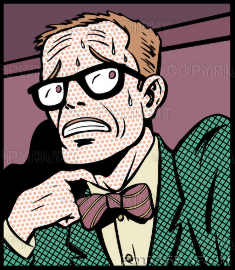
Is social media really that social?

As a society we’re more connected than ever before. We know what our friends are doing at seemingly any hour of the day. We’ve had a look through their latest holiday photos. We’ve even been able to catch up with that person we haven’t seen or heard of since the last day of school.

But I wonder what impact it’s having on the day-to-day manner in which people interact. Years ago, a colleague of mine made a short film where friends were supposedly ‘catching up’ over a coffee. Instead, they sat in a café and took turns answering their mobile phones and barely even spoke to each other.

Like that short film, I wonder how many people are too busy chatting with cyber friends instead of speaking to real people that may be right in front of them. In a modern family, would it be uncommon to see one parent answering work emails on their Blackberry, the other parent chatting with friends on Facebook, one child checking what their mates are doing on Twitter, and another child having a conversation with someone via SMS?

Look, I’m no luddite. I realise that these ways of communicating have many benefits but is anyone stopping to question if there’s a downside (and no, I’m not talking about bad reception or no Wi-Fi)? I’m talking about face-to-face interaction taking a serious backseat to the digital stuff.

Some people may argue that television was just as interruptive to how families or groups communicated (or didn’t) when it arrived on the scene. However, in defence of television, it is a more communal medium. A group of people all sit around and share the same experience, often using it as the basis of a conversation. And the other thing is that TV (at least how it exists in its current form) is a fairly passive medium. You just sit in front of it, and it all comes to you. It doesn’t take you away into a separate conversation or experience, excluding the other people who may be sitting in the room with you.

For example, I think a person having an ongoing conversation via SMS while other people are in the same room is a little like whispering to someone in the presence of others. When I was a child I was taught that this was rude behaviour because it’s alienating. However, these days, if it’s the same behaviour but uses technology, it’s seemingly appropriate.

These technologies were designed to aid human interaction, not replace it, so the ground rules and basic manners should still remain the same.

So next time you’re using social media or spending time online, just keep in mind that you could be missing out on much more than someone’s status update. Or put another way, you don’t want the only social life you’re living to be a digital one.

DUSTIN LANE
Brand Strategy | Advertising Concepts | Copywriting

Visit risinggiants.co or dustinlanecreative.com

Most questions are good. Aren’t they?

Have you ever been in one of those meetings where people don’t really like questions being asked? Or what about those scenarios where some items simply aren’t up for discussion?

Every now and then you run into them – a client who doesn’t want to be challenged, a planner who doesn’t like you to interrogate a creative brief, a suit who doesn’t like you asking why the creative work needs to be amended as requested, a creative who doesn’t want to answer why they’ve done something a certain way.

Well, I think there’s a lot to like about questions, and I’m not the only one. Voltaire (1694 – 1778), the French author and philosopher, said this: ‘Judge a man by his questions rather than by his answers’. So why my love of questions? Well, I have a few reasons.

Firstly, questions help to clearly define the objectives. They put things into context and force people to focus on what the actual problem is. It’s amazing how many times people can get caught up trying to devise a solution that won’t solve the real problem that’s at hand. And, to put it simply, it’s a waste of effort (and money) when people do this – they’re mistaking momentum for progress. It’s no good doing something if it’s not the right thing to be doing.

Secondly, asking questions helps identify if there are mixed agendas and motives on the table. When things aren’t all pulling in the same direction, you’re not going to achieve as much because there are different factions at work.

Another reason is that it’s a very rare occasion where solutions are found without asking questions. Even when things are discovered by serendipity (like penicillin), it’s because questions are being asked.

I once worked for a Creative Director who said that questions should never be seen as a sign of weakness or lack of knowledge. Instead, they show that you’re eager to learn and want a more thorough understanding of a subject.

In my experience, when people don’t like questions being asked it’s usually because: 1) they don’t know the subject well enough to answer them; or 2) they’re trying to cover up something they know defies logic or is fundamentally flawed.

Sure, there are times when people ask questions just for the sake of saying something in a meeting. And there are times when people ask questions to try and develop problems where there are none. But if you’re being deterred from asking valid questions, well, surely questions need to be asked. Don’t they?

Look at Columbo. He just loved questions…

DUSTIN LANE
Brand Strategy | Advertising Concepts | Copywriting

Visit risinggiants.co or dustinlanecreative.com
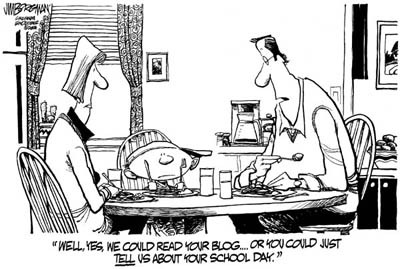
Always ask ‘why?’

Last week a colleague left the agency to travel overseas. She was a very good Account Manager and has a very bright future ahead.

She had come to the ad agency as a university graduate three years ago and this had been her first advertising job. As part of the graduate induction program, she started her career here by spending a couple of weeks in each department to learn how an agency worked.

In her two weeks sitting in the Creative Department alongside my Art Director and I, we offered her lots of tips and advice, but this I consider amongst the most important: Always ask ‘why?’

It seems simple but often this small question is overlooked. It’s imperative that you know the reason why you’re doing something. Not only does it make you aware of any other agendas that are at play, it helps your understanding and makes sure the solution provided actually fits the problem.

If you’re simply relaying a message from the client (or anybody else), you are effectively reducing your role to that of an expensive answering machine.

Put simply, if you’re unaware of the motive, don’t carry out the action.  Doing so just makes you look like one of these monkeys.

DUSTIN LANE
Brand Strategy | Advertising Concepts | Copywriting

Visit risinggiants.co or dustinlanecreative.com

Don’t be a monkey

Here’s an oldie, but a goldie:

Start with a cage containing five monkeys. Inside the cage, hang a banana on a string and place a set of stairs under it. Before long, a monkey will go to the stairs and start to climb towards the banana. As soon as he touches the stairs, spray all of the other monkeys with cold water. After a while, another monkey makes an attempt with the same result; all the other monkeys are sprayed with cold water.

Pretty soon, when another monkey tries to climb the stairs, the other monkeys will try to prevent it. Now, put away the cold water. Remove one monkey from the cage and replace it with a new one. The new monkey sees the banana and wants to climb the stairs. To his surprise and horror, all of the other monkeys attack him. After another attempt and attack, he knows that if he tries to climb the stairs, he will be assaulted.

Next, remove another of the original five monkeys and replace it with a new one. The newcomer goes to the stairs and is attacked. The previous newcomer takes part in the punishment with enthusiasm! Likewise, replace a third original monkey with a new one, then a fourth, then the fifth. Every time the newest monkey takes to the stairs, he is attacked. Most of the monkeys that are beating him have no idea why they are not permitted to climb the stairs or why they are participating in the beating of the newest monkey.

After replacing all of the original monkeys, none of the remaining monkeys have ever been sprayed with cold water. Nevertheless, no monkey every again approaches the stairs to try for the banana. Why not? Because as far as they know that’s the way it’s always been done around here. And that, my friends, is how a company policy begins.

DUSTIN LANE
Brand Strategy | Advertising Concepts | Copywriting

Visit risinggiants.co or dustinlanecreative.com
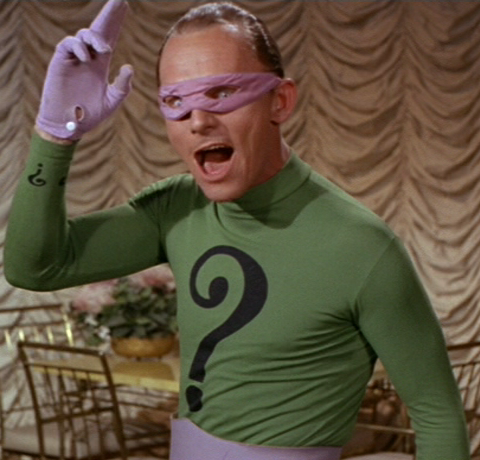
Sometimes it’s best to let people do the job you hired them for

This morning I took my car to the mechanic and told him the clutch was slipping badly. I also advised him when the problem seems to be at its worst (going up hills or accelerating).  He said that he’d take a look at it and ring me later to say what needs to be done in order to fix it.

So let’s just take a moment to break that scenario down.

  1. I had a problem (clutch slipping).
  2. I took the problem to a professional who I hire because he has a certain skill set (my mechanic).
  3. He said he’d come back to me with a solution.

Now, in the advertising world, the above scenario doesn’t always work this way. Let’s take a look at a few advertising scenarios.

Scenario 1

  1. The client wants a <insert new, fan-dangled media thing here> (for argument, let’s just say that it’s a Facebook page).
  2. The client then approaches their advertising agency and says, ‘I want a Facebook page’

Scenario 2

  1. The client has done some research and identified that there is a market for one of their existing products to be served in a larger container (for argument, let’s just say it’s a bottle of milk).
  2. The client tells their advertising agency, ‘We want to advertise that our milk is now available in a 600mL bottle’.
  3. The agency then comes back with a print advertisement that’s visually engaging, has a clear pack shot of the new-size bottle and a headline that reads ‘Brand X Milk. Now also available in a large 600mL bottle.’
  4. The client likes the ad, but they want to make a few changes. First, they ask the agency to change the headline so it reads ‘Brand X Milk. Now available from your local store in a larger 600mL bottle’. Their reason is that they want to include a reference to their distribution chain into the ad.
  5. The other change they ask the agency to make is to include a picture of the smaller, original-size bottle with the subhead ‘Also still available in original 300mL bottle’. Their reason is that they want make it very clear that their original size is still available too.

So let’s make a few observations from the above scenarios.

In Scenario 1, you’ll notice that the client didn’t give a problem. Instead, they’ve chosen to give a pre-selected solution to their advertising agency. This begs some questions like ‘what is the actual problem that the solution of a Facebook page is addressing?’ or ‘is this the best way to address that particular problem?’

In Scenario 2, you’ll notice that the client dictated what the headline in the ad was, and you’ll also notice that they changed the objective  – they broadened the focus so it now has to have a small reference to the product distributors and also has to advertise the original-size product. By adding in extra messaging like this, it only serves to dilute the ad (there is an earlier post on this subject).

So, if we take the advertising scenarios back to my dealing with the mechanic this morning, and applied Scenario 1, it would have involved me (who, in this case, is the client) going into the mechanic and telling him I wanted a new gearbox. I wouldn’t have engaged his area of expertise and I mightn’t even be addressing the real problem.

Applying Scenario 2 would have involved me going into the mechanic and asking him to fix the problem. Then I would have stood behind him and told him how to fix it, suggesting bolts to tighten etc. And, on top of this, I would have even thrown in an extra job as well, like asking him to wash the car because I wanted it to look shiny as well.

The moral of the story? You should try and keep in mind the reason why you chose to employ someone’s professional services, and then listen to their recommendations. It works in other industries. Advertising should be no different.

DUSTIN LANE
Brand Strategy | Advertising Concepts | Copywriting

Visit risinggiants.co or dustinlanecreative.com

Loading up the camel

A couple of years ago, we were working on a particular brand. It was quite an established player in other markets around the globe but was yet to make any real impact in Australia.

At one stage, the local client had his overseas colleagues visiting. These were people who were in charge of the brand in places like France and Japan. Anyway, the local client took the opportunity to bring his colleagues into the advertising agency to show them around and see how things were going.

After a bit of an office tour, everyone took a seat in the boardroom. Of course, the agency took the opportunity to show their wares by showing their reel and case studies of the great work they had produced for a range of different clients. Then, the client from Japan asked a very good question: ‘Okay, these are great examples of when your advertising has worked. What is the problem when it doesn’t work?’

Warren Brown, co-founder and Executive Creative Director of BMF, gave this great response:

‘Usually, when a campaign doesn’t work, it’s because there’s been a loss of focus. You move away from your single, clear objective. For example, let’s just say that the objective is to get from one side of a desert to the other. So, to meet that objective, we get ourselves a camel that’s perfect for the trip. The camel’s been trained to make that distance and he’ll do that particular job very well. But then, what often happens, is we start giving the camel other jobs to do as well. We give him extra things to carry, we change his route, etc. So while we started with a clear objective (to cross the desert) and had a fitting solution (a camel to do it), we lost focus and altered the objective. So, now that the camel has to carry extra weight and travel a different route, chances are he’s not going to make it.’

In marketing, we see this all the time. Ad agencies are often asked to alter a solution so it includes extra messaging, or appeals to extra target markets, or can be used in different media channels, or do something else entirely.

By doing this, you’re slowing down the camel so he won’t be able to meet the original objective. But worse still, in many cases you’ll even break his back.

Someone else has created this humorous video to highlight the problem…

DUSTIN LANE
Brand Strategy | Advertising Concepts | Copywriting

Visit risinggiants.co or dustinlanecreative.com