
A former colleague passed this on the other day. It shows that sometimes the cost of finding (or making) more time for a job is well worth it.
A former colleague passed this on the other day. It shows that sometimes the cost of finding (or making) more time for a job is well worth it.

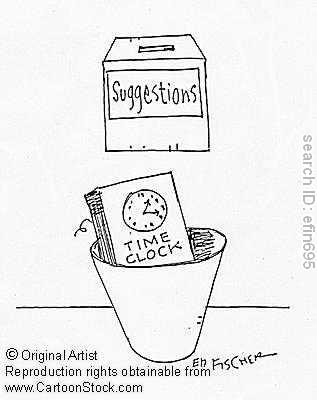 Years ago, I was sitting in a briefing with my art director and the account director. Both are amongst the finest I have had the privilege of working with. My art director pointed to the section of the creative brief marked ‘Creative Head Hours’. Next to it was the number 10. To this, he asked the account director, ‘How do you know how long it will take us to find a solution?’
I knew what he meant. One of the most stressful parts of being either a copywriter or art director is you have no idea how long it will take you to crack a brief. You might find a great solution in 10 minutes, or 3 weeks later you might still be coming up empty-handed. And it’s not as if it’s ‘pens down’ when you reach the time allocated to a job – you simply keep going ’til you find an answer.
The account director replied to the question by saying it’s only an estimate, based on similar jobs in the past.
I guess the real problem here is the word ‘similar’. The work a creative ad agency prides itself on is bespoke. And the best work is always truly original, rather than ‘similar’. As we progress further into using new mediums and technologies as part of commercial communication, this imperfect model of remuneration will only be exposed with more faults.
 However, ad agencies have a long history of problems charging a fee for its true product. Few would argue that the core product of an agency is its ideas. But in the past we were happy to give them away for a cut of the media spend. Then media went out of house. Since then, most agencies have tried to plug the hole by clawing back money through things like studio hours or the growth and higher involvement of planning departments.
So what’s the answer? Well, I don’t have one (at least not yet, anyway), but I’m sure there are sharper minds than mine thinking about it. In fact, I’m sure it keeps some CFOs awake at night.
There’s been plenty of remuneration models bandied about such as incentive/performance-based ones, retainer ones, project-based ones, hybrid models of all these, and more. Each have their pros and cons.
The real problem is that charging for intellectual property is difficult. It’s hard for a client to buy anything truly original because, at that stage, they’re unsure about what it is they are actually buying. The perception of value is usually only realised once the idea takes on a more tangible form. And if we’re at that point it means that the work has been done and the project is complete, or it’s at least in the later stages of development.
 As I’ve said , nobody has found the perfect answer yet. But if you do happen to find it, make sure you charge more than ‘head hours’ for it. A couple of years ago, MDC – the holding company that counts Crispin Porter & Bogusky, 72 and Sunny and Anomaly amongst its many agencies – put out a bounty. They were willing to put up US$1 million to partner with anyone who successfully pitched a new agency model to them.
DUSTIN LANE
Brand Strategy | Advertising Concepts | Copywriting
Visit risinggiants.co or dustinlanecreative.com

Part social commentary, part tribute.
Without visionaries like Steve Jobs, the world would be a different place…
DUSTIN LANE
Brand Strategy | Advertising Concepts | Copywriting
Visit risinggiants.co or dustinlanecreative.com
Posted in Uncategorized
Tagged Apple, Crazy Ones, Dingo's breakfast, Steve Jobs, Think Different, Visionaries
I recently came across a story that talked about Mark Fenske (at the time of writing, his site was offline) and his ‘Nincompoop Forest’.
Put simply, he talks about the importance of fighting for great ideas, and it goes like this:
For an idea to live, it must journey from the mind of its originator out into the ears of others, into the world.
To live, it must cross an area that is dangerous to the life of an idea… an area between the mind of an originator and the world where other people live who fight against ideas and try to kill them. This area, that challenges every ad idea the moment it is born, is called the Nincompoop Forest.
To find your way through the Nincompoop Forest, it takes heart, intelligence and determination.
There are many obstacles lying in wait. Some people fear big ideas, or are afraid to defend them, or don’t know how to explain or sell them.
Some people are afraid to buy big ideas because, by their nature, they have never been done before and can be scary. (It’s been said that if you’re not scared of an idea, it probably is not a big idea at all.)
You’ll have to save your idea from all the people who want to change the idea, “help” the idea, compromise the idea. They want to “make it better” or safer or less expensive or more comfortable.
All great ideas have to beware of the Nincompoop Forest.
DUSTIN LANE
Brand Strategy | Advertising Concepts | Copywriting
Visit risinggiants.co or dustinlanecreative.com
Posted in Uncategorized
Tagged ad agency, advertising, Compromise, creative department, Dingo's breakfast, ideas, Mark Fenske
At the moment, there’s a team seated a few desks over from me who are busy putting a TV ad together. They’re trying to decide on the music they’ll use (or create). Music should always be given the upmost consideration because it can make or break an ad. They don’t call it ‘the golden thread of film’ for nothing.
To illustrate this point to clients, I like to show them this ad from a few years back for Tourism Victoria…
Then, I show them the same ad, but where someone has put the music from Donnie Darko behind it…
I think you’ll see just how much of a role music plays in the mood and feeling of an ad.
DUSTIN LANE
Brand Strategy | Advertising Concepts | Copywriting
Visit risinggiants.co or dustinlanecreative.com
Posted in Uncategorized
Tagged advertising, Dingo's breakfast, music in advertising, Tourism Victoria, TV ads
 Recently I caught up with an old mate, Daz, for a beer.
Daz has an interest in a small business called Bark Blowers. Put simply, this service allows customers to have sand, soil, blue metal, pebbles or mulch installed without having to unload/reload on site. Through a powerful pneumatic hose system, you quite literally spray the product wherever you want it.
Recently, they’d done a commercial through a regional TV station. The station produced the ad for very little cost but he was unhappy with it. He said it was wall-to-wall voiceover and seemed like it just yelled ‘heaps of shit’ at the viewer. Knowing I worked in advertising, he asked my opinion on whether ads should be packed full of information, or whether having a strong element of entertainment was more important.
I answered that it’s an age-old topic discussed between advertisers (who tend to support ‘information’) and their agencies (who tend to support ‘entertainment’). Having worked for a regional TV station in a previous life, I also told him that they produced his ad so cheaply because their motive was to give him something he could run on air (where they make their money in air time).
I suggested that these are some things he might like to consider:
DUSTIN LANE
Brand Strategy | Advertising Concepts | Copywriting
Visit risinggiants.co or dustinlanecreative.com

Posted in Uncategorized
Tagged ad agency, advertising, advertising platforms, advertising value, brands, campaigns, Dingo's breakfast, marketing, Nick Law
I was asked to give a talk at the ADMA (Australian Direct Marketing Association) Forum last week – a simple ten-minute presentation showing an interesting example where an organisation has used mail as part of their marketing communications.
I could’ve found a big, dimensional mail pack with lots of wow-factor but, let’s face it, not many marketers have the budget to do those. So I looked for a nice, simple example of a letter and envelope. And I came across this one from Zurich Insurance, produced by Publicis Dialogue in London (source: Directory, directnewideas.com).
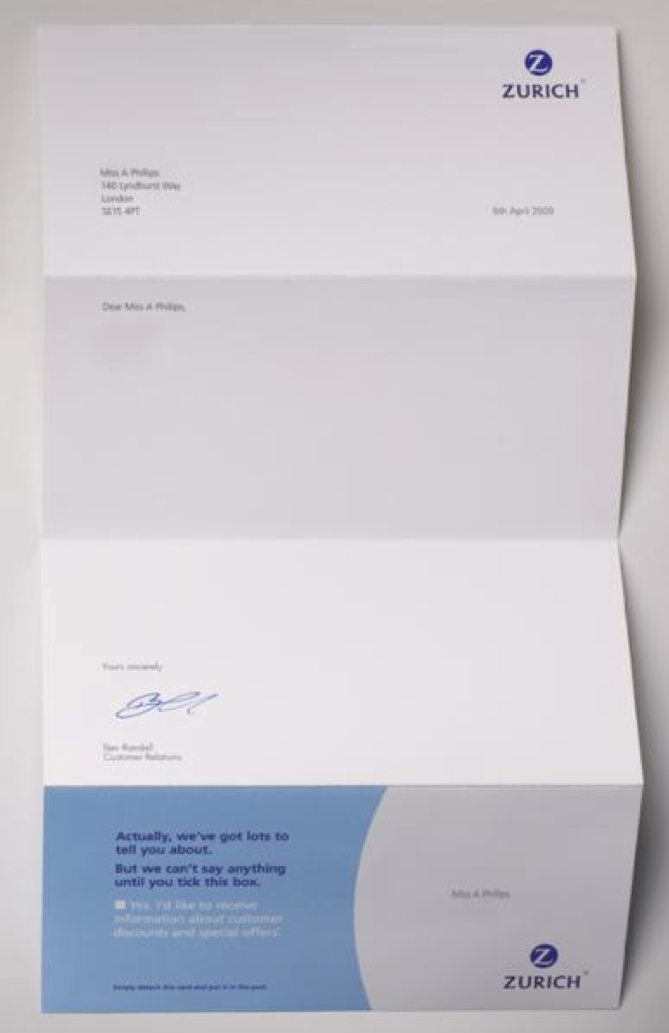
The copy says:
Dear Miss Philips,
Yours sincerely,
<Customer Relations Guy’s name>
Actually, we’ve got lots to tell you about. But we can’t say anything until you tick this box.
Yes, I’d like to receive information about special offers.
According to the case study, the problem was that 25% of Zurich customers had opted out of receiving marketing communications. This letter convinced 7% of recipients to change their mind and opt back in. A pretty good result.
‘Opting out’ is pretty bad news for marketers, because it’s the customer saying, ‘I don’t want to hear from you anymore’. It’s the end of the conversation, and if the customer ended it, it must not have been that good in the first place.
What many marketers don’t really want to acknowledge is that your starting point is this: People don’t care what you have to say.
As blunt as it sounds, it’s true. People are too time-poor and you’re just one of many organisations yelling and selling at (potential) customers.
So, what’s the solution? Well, it’s pretty simple – don’t create ‘ads’. An ad is something people avoid. Rather than create ads that try and interrupt or invade people’s lives, create something people seek out and engage with. Now, many people might say, ‘People don’t actually seek out ads do they?’ Yes, they do. Provided they’re good and/or relevant enough.
Howard Gossage, muttered these words during the Madmen era, and they’re probably more relevant now than they’ve ever been:
“People read what interests them, and sometimes it’s an ad.”
For example, take a look at The Old Spice Response campaign.
20 million views in the first three days, 40 million in the first week. Website traffic up by 300%, and sales up by 107% – here is a case a people seriously ‘opting-in’ to a brand.
Now, I’m not suggesting we go and make personalised videos every time we want to talk to a customer but there are some important points we can take on board, whatever medium you use…
DUSTIN LANE
Brand Strategy | Advertising Concepts | Copywriting
Visit risinggiants.co or dustinlanecreative.com

Posted in Uncategorized
Tagged ad agency, ADMA, advertising, conversation, Dingo's breakfast, Direct Mail, Direct Marketing, marketing, relationships
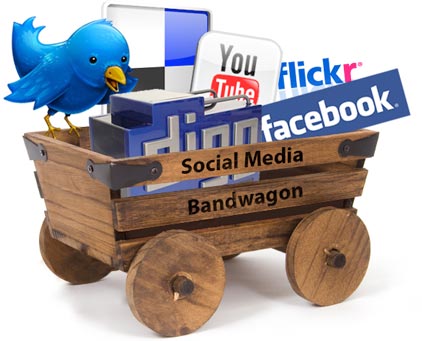 It still amazes me how many marketers just don’t understand social media. Many only see the word ‘media’ without taking any notice of the word before it – ‘social’.
After all, marketers should feel like they know about media. They have a long relationship with it. Or as one of my uni lecturers once put it, ‘Most media exists solely for the purpose of delivering an audience to marketers’.
But, ‘social’ media? No, it’s a different beast altogether.
The dictionary defines ‘social’ as:
1. pertaining to, devoted to, or characterized by friendly companionship or relations: a social club.
2. seeking or enjoying the companionship of others; friendly; sociable; gregarious.
3. of, pertaining to, connected with, or suited to polite or fashionable society: a social event.
So in general terms, social media is about people mixing, being friendly, having fun. If you’re a brand and you’re not doing this, well, you have no business being there.
It’s painfully obvious if you’re just trying to sell something and turn a quick dollar. And while other mediums might have grown up in an era where the interruption model of advertising reigned, social media didn’t.
This means people won’t accept being interrupted by commercial messages the way they have been in the past (actually, with the advent of things like TiVo and Time Shifting, you could argue that interruptive advertising’s best days are long gone).
Sure, other people may have a conversation about your brand using social media, but when you do it yourself, it just doesn’t work. And here’s the reason why: when you’re trying to apply some kind of sales message in social media, more often than not, you end up sounding like that ‘mate’ you only ever hear from when he wants a hand moving heavy furniture. He never rings you just to share a joke, or to catch up over a beer. In fact, the only time you ever hear from him is when he wants something.
Is that the kind of relationship you want your brand to have with its customers?
DUSTIN LANE
Brand Strategy | Advertising Concepts | Copywriting
Visit risinggiants.co or dustinlanecreative.com

Posted in Uncategorized
Tagged ads, advertising, brands, communication, Dingo's breakfast, marketing, social media
Okay, let me start by saying that I might be the only person working in advertising who is yet to surrender to the iPhone phenomenon. Looking around the office and the hardware that people sit on the tables at meetings, these gadgets are everywhere. And it seems those few who aren’t in bed with Steve Jobs have an Android version.
On a daily basis, I listen to people talk about how much fun they have with the latest app they’ve downloaded. Wherever they are in the office, they receive the all-staff email about the leftover, free muffins in the kitchen. When any dispute or question arises, they pull out their trusty gadget and have the answer within a few taps. They’re probably the kings of Trivia Night at their local pubs.
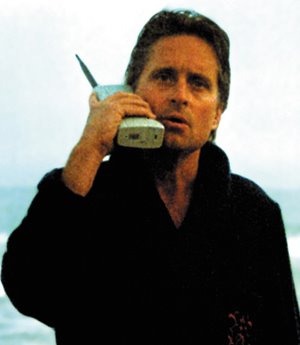 But not me. Why? Why do I resist this temptation and put up with jibes like ‘Hey, nice Motorola V3. Is that similar to the one Gordon Gecko had in Wall Street?’
Well, firstly I just don’t think the iPhone works as a phone that well – at least not yet, anyway. All the other functions seem to work fine, but try and call somebody to actually speak with them, and all bets are off.
But my laggard ways to adopt a smart phone run deeper. I actually suspect that these devices may be removing people’s ability to think – much like calculators have replaced my Art Director’s ability to do long division.
Think about it (no pun intended). These days we’re conditioning a society where you don’t actually have to know anything apart from how to open a browser and do a search. You don’t even have to know how to spell what it is you’re searching for – the search engine will understand what you mean and make any necessary adjustments.
If you don’t believe me, simply try it for yourself. I just Googled “how to cross a raod” (sic) and 361,000,000 answers were delivered to me in 0.15 of a second. That’s even faster than Usain Bolt could cross the road (providing he had Googled it earlier).
In this age of immediate access to information, we’re also breeding impatience. Once upon a time if you wanted to know the answer to something, you dragged your arse to the library and looked it up. These days, if our Internet connection is a bit slow and takes, heaven forbid, 5 seconds to deliver our 361 million answers, there’s usually swearing involved.
Look, I don’t want to give you the wrong idea. I’m not the main character from The Mosquito Coast. I’m not against the Internet and all the information it makes accessible. It’s great. I just think we have to be conscious of being plugged into all that information constantly. There are plenty of benefits to carrying a smart phone, but you should also consider the cost (and no, I’m not talking about when you exceed the data allowance on your cap plan).
Even good things need balance. Take water – it’s essential for life, but have enough of it, and it can kill you.
So, along with our newfound fondness of instant gratification (lack of patience), let me ask you this: when’s the last time you looked out the bus window and just pondered? Or sat in a park or shopping centre and just watched all the people pass by? When’s the last time you simply sat down and thought about a problem to arrive at your own solution, rather than looking up someone else’s?
The truth is that you need downtime. You need the freedom to think. So unplug yourself, at least for a little while each day, because your dreams and ideas will never happen unless you give them an environment to live in.
And if you still don’t believe me, well, look up ‘Daydream’ on Wikipedia.
DUSTIN LANE
Brand Strategy | Advertising Concepts | Copywriting
Visit risinggiants.co or dustinlanecreative.com

Posted in Uncategorized
Tagged advertising, daydreaming, Dingo's breakfast, ideas, iphones, smart phones, technology, thinking

 dingosbreakfast.com