 At every agency I’ve ever worked, there has been the ‘client walk around’. It’s where existing clients or potential clients are taken on a tour of the agency. There’s always a fairly similar response after you hear the ‘tour guide’ announce, ‘…and this is the creative department.’
It’s at this moment, you can look up to see a group of visitors eagerly looking on, as if anticipating some sort of magical and secret activity to give birth to ideas. Sometimes at these client orientation days, you’re invited to give a small talk and some Q&A about what your job is and how it contributes to delivering the product/service the client is ultimately paying for.
Usually, this means talking about the team structure and, traditionally, how art directors look after the pictures and how copywriters look after the words.
As we all know, the line between the roles is a little more blurred these days. Sometimes it’s removed altogether. So are there other differences between art directors and copywriters? Some people might say there are common traits that can be attributed to each title (keeping in mind there are always exceptions when making sweeping generalisations).
Of course, there’s the old joke:
Q: How many art directors does it take to change a light bulb?
A: I don’t know. What do you think?
Q: How many copywriters does it take to change a lightbulb?
A: I’m not changing a fucking thing!
If you’ve ever spent any time working with art directors and copywriters, you understand this joke. There’s a truth in the art director being more open to other opinions and less committed to making a decision by themselves. It also highlights that copywriters can sometimes be a little precious about changes to their copy.
My old art director and I used to discuss why this was so. We arrived at a few theories.
An art director’s career path is often via the studio where their job involves making lots of changes under other people’s direction. They’re used to having people sit on their shoulder, telling them to move stuff 2 pixels to the left and to adjust the cyan and opacity.
Also, the art director actually gets to make the changes to their work. Most clients can’t use InDesign or Photoshop (although this won’t be the case in the future) so their changes come back as suggestions or requests to be carried out by the art director.
On the other hand, everyone knows how to type. In Australia, english is a mandatory subject until you graduate from high school. This means clients have the option of typing straight over the top of the copywriter’s work, or firing up their preferred tool of choice – Track changes. So, often, clients don’t ask copywriters to change their work, they simply do it for them.
And sometimes clients have no real reason for making the changes they make – they simply think it’s part of their job description. For example, I can remember a radio recording once, where we had the radio ad just the way we wanted it (except final sound mix) when the client arrived for a listen and approval. The talent was still in the studio booth. Within a few moments, the client was making changes – ‘Can we just punch this word out a bit more?’, ‘Can we just say that word louder?’. I asked them, in a nice way, if we were making changes to fix something or if we were making changes for the sake of making changes. They realised what they were doing, stopped and said, ‘Sorry, you’re right. I just started doing that automatically’.
And that’s the point I’m making. The creative team has thought about it and have a reason for doing it the way they’ve done it, so if the client is going to change it, they should have a reason too.
If the client doesn’t have one, it tends to make copywriters just a little more bitter and twisted.
At one of my old agencies the question was asked why more creative directors come from a copywriter background rather than an art direction background (although that may not be the case these days – it seems pretty even). The reason someone gave was that copywriters spend years structuring an argument on selling a particular point of view via their copy, so this helps them in the role of CD. I’m not sure how accurate that is.
Another former boss thought that, generally speaking, art directors made better CDs because of their temperament.
What about you? Do you think there are any defining traits between art directors and copywriters?
DUSTIN LANE
Brand Strategy | Advertising Concepts | Copywriting
Visit risinggiants.co or dustinlanecreative.com

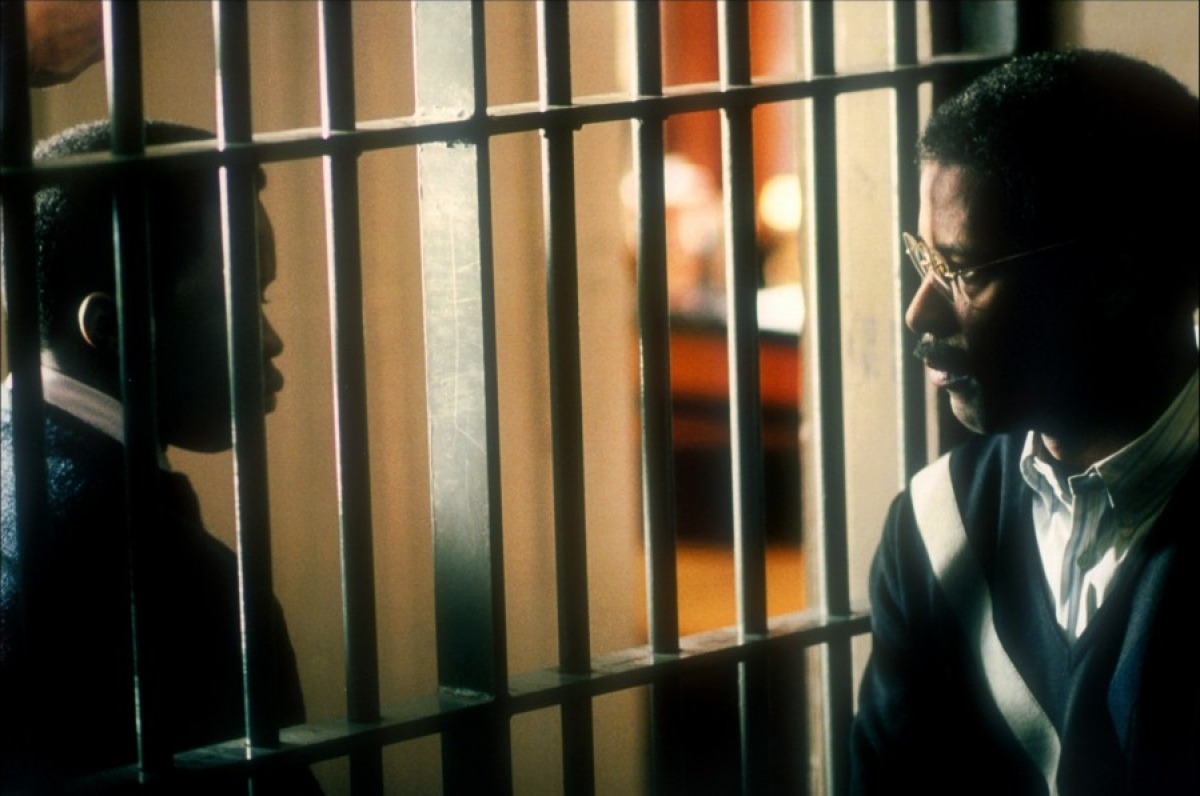 Remember the 1999 movie, The Hurricane? It’s the story of Rubin ‘Hurricane’ Carter, a champion boxer wrongly convicted for a triple homicide (Bob Dylan also drew attention to the story)



 dingosbreakfast.com